Launch offer — valid today only

📄 Digital book in PDF · read it on your phone or print it

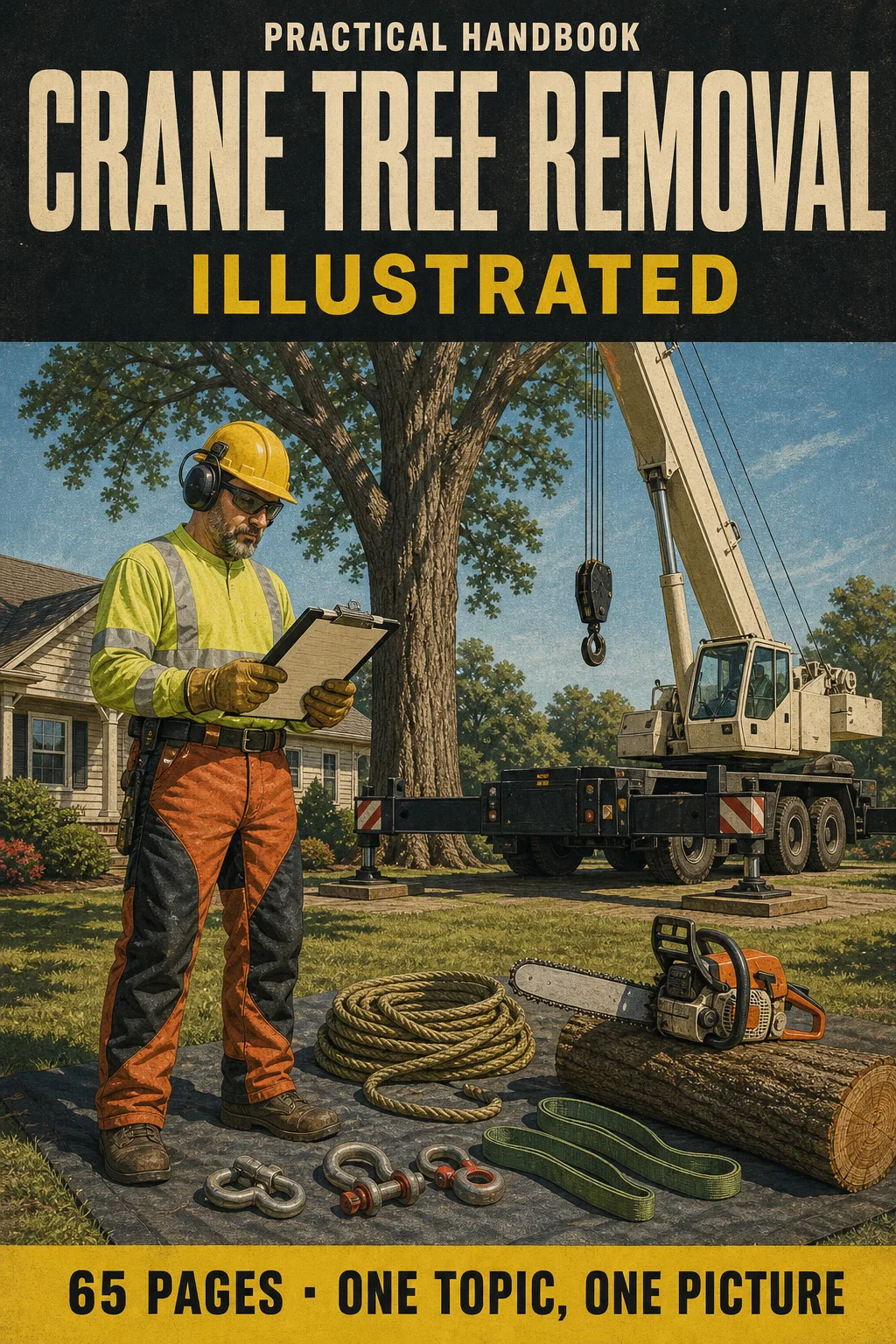
Crane Tree Removal and Load Charts, All Drawn Every Pick in the Same 6 Steps

The 6-step pick method, pick weights in pounds, reading the load chart, the balance point, chokers and bridles, the cut sequence, hand signals and the pick plan sheet. Every topic has its own page: the drawing first, then what you need to remember. 65 illustrated pages.

YES, I WANT TO PLAN EVERY PICK IN 6 STEPS

🔒 Secure checkout · PDF by email · 30-day guarantee

Every topic, its own pageEach pick step drawn, with the explanation right beside it
65 illustrated pages65 illustrated pages, 8 parts, 61 topics
Up-to-date sourcesCross-checked with ANSI Z133, OSHA crane rules and ASME B30
PDF by emailFormat

Look Inside the Book

Every page has a big drawing and a box with the weights, rules and steps you need to know:

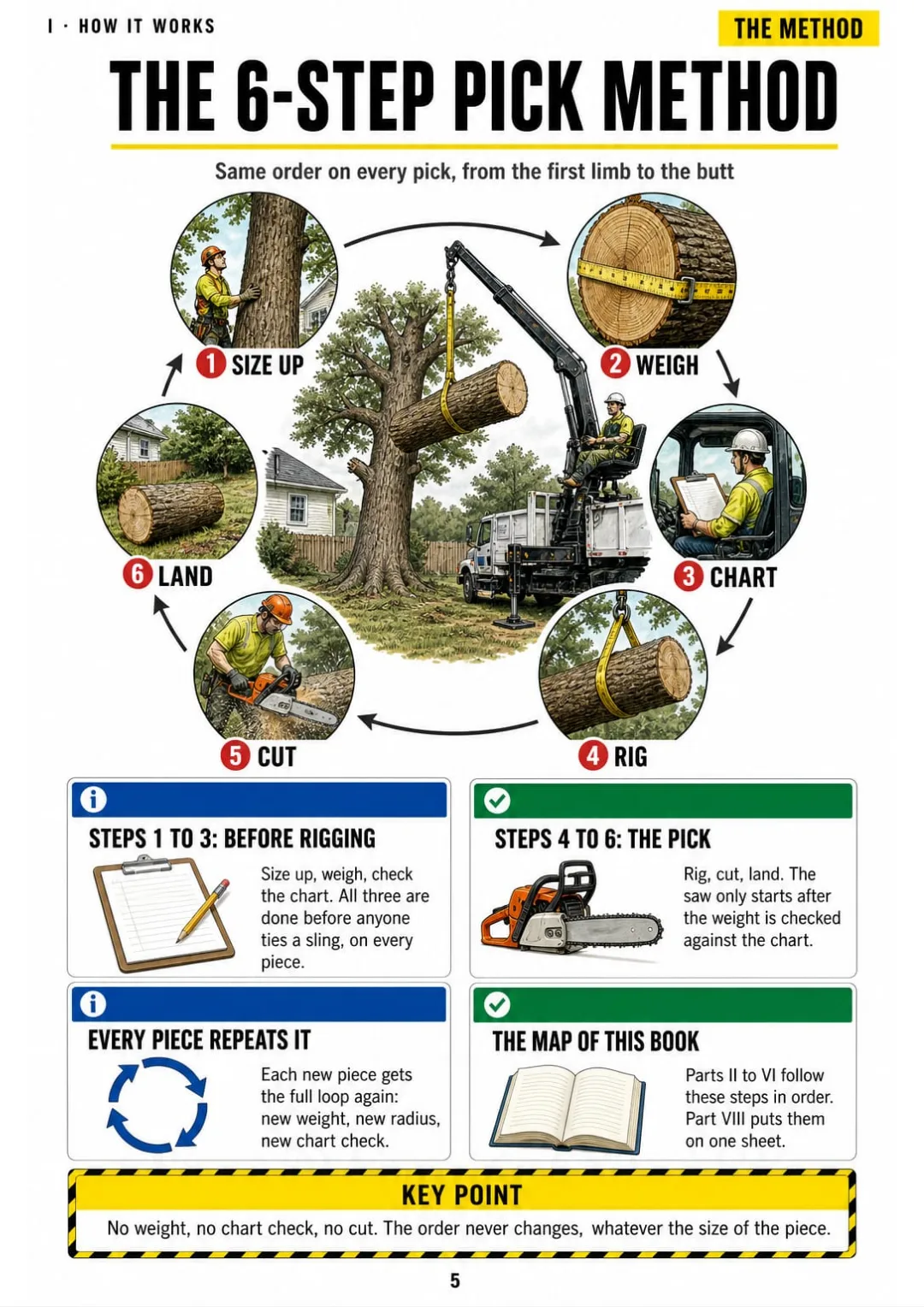
Size up, weigh, chart, rig, cut, land: one loop, every piece.
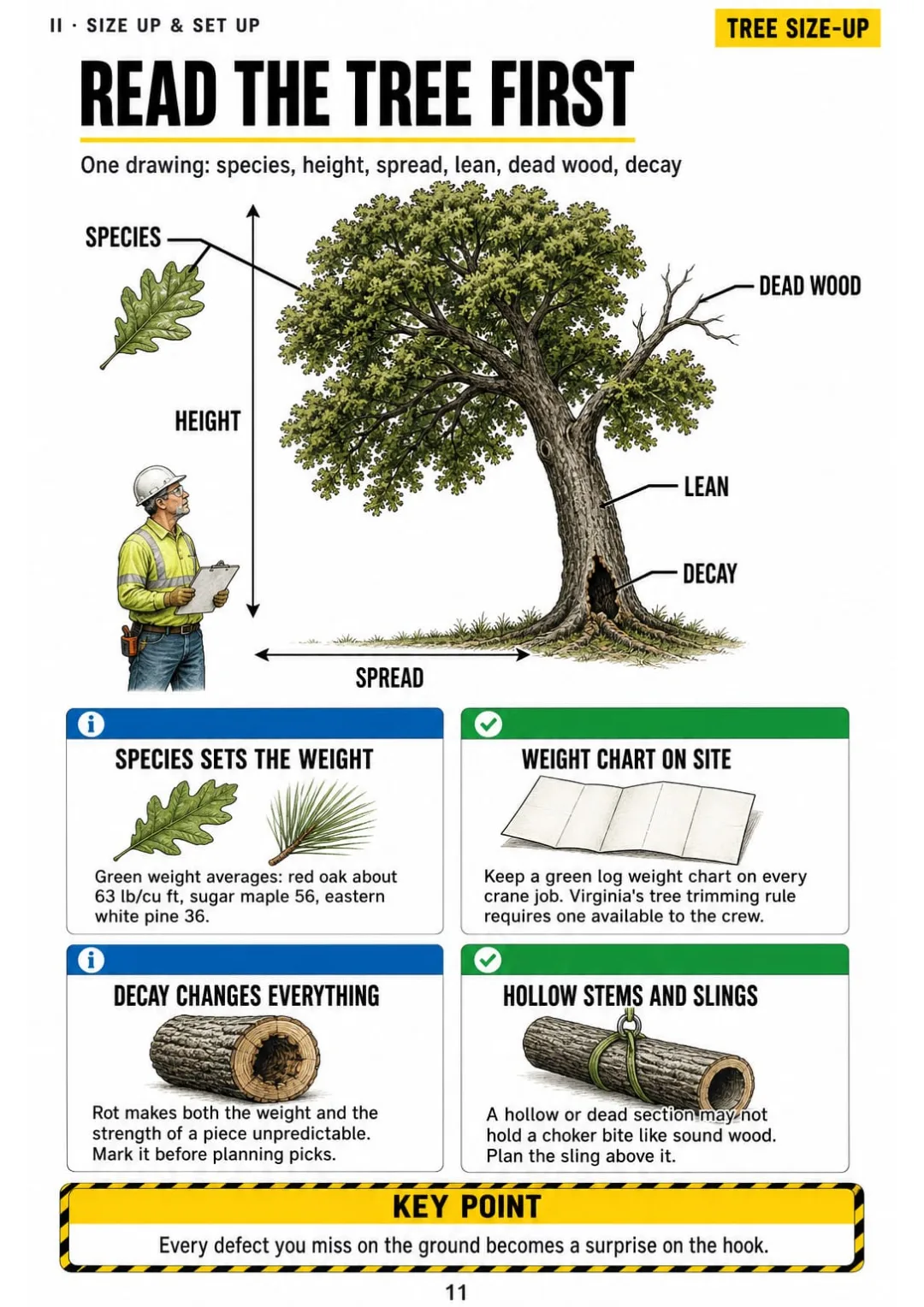
Six things to mark on the tree, and why red oak runs about 63 lb per cubic foot green
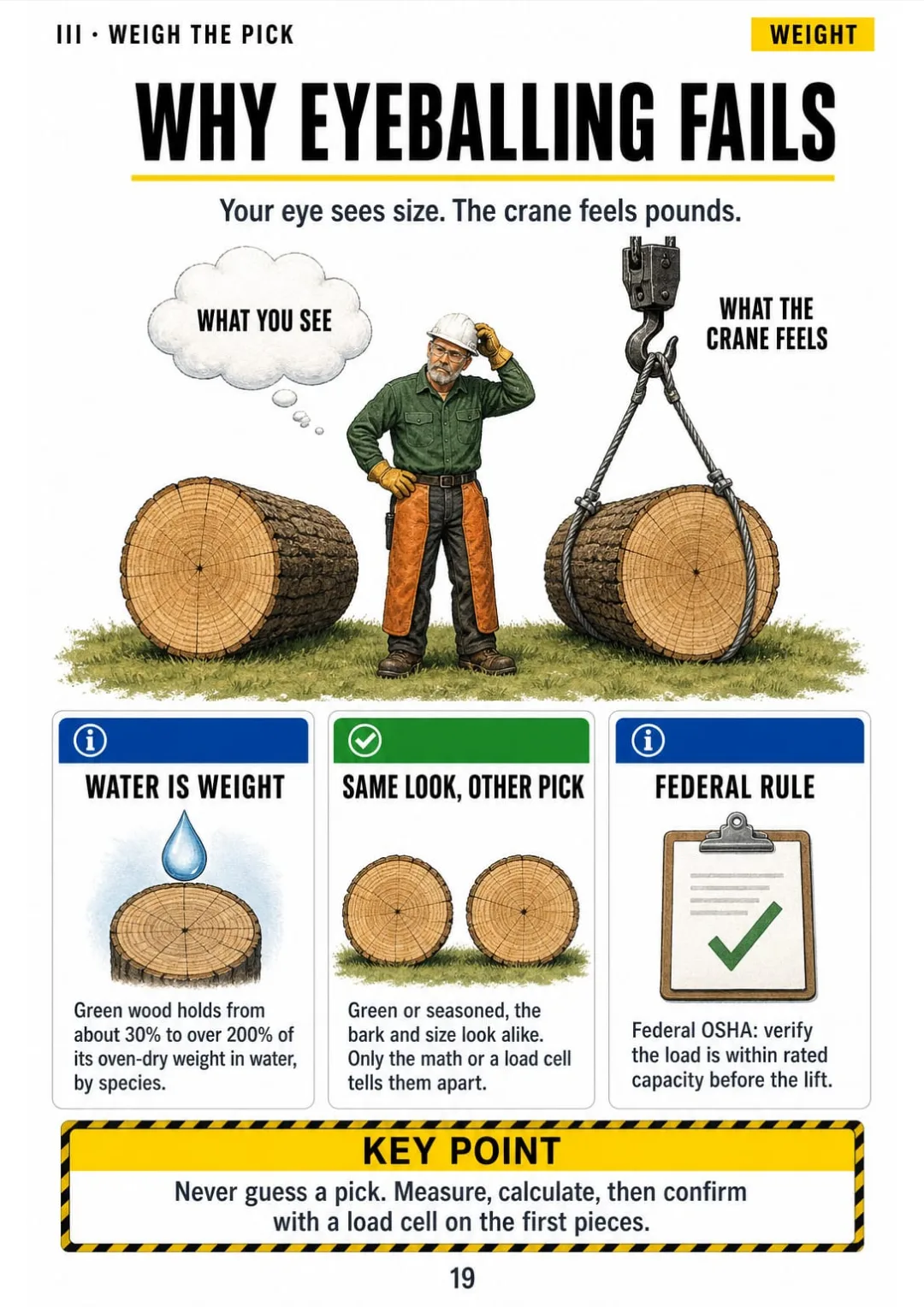
Green wood can carry 30% to over 200% of its dry weight in water
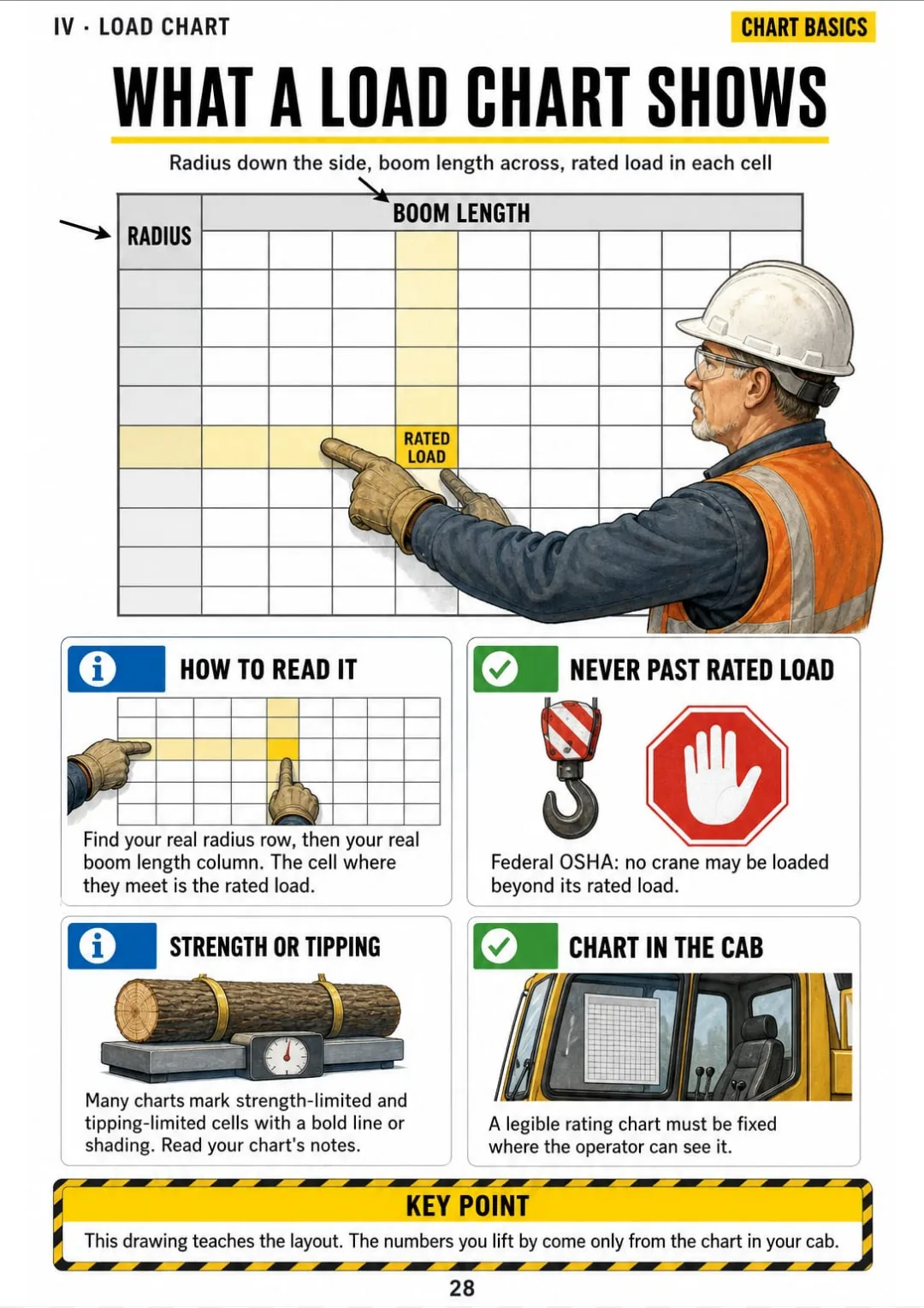
Radius row + boom length column = the rated load cell. Never load past it.
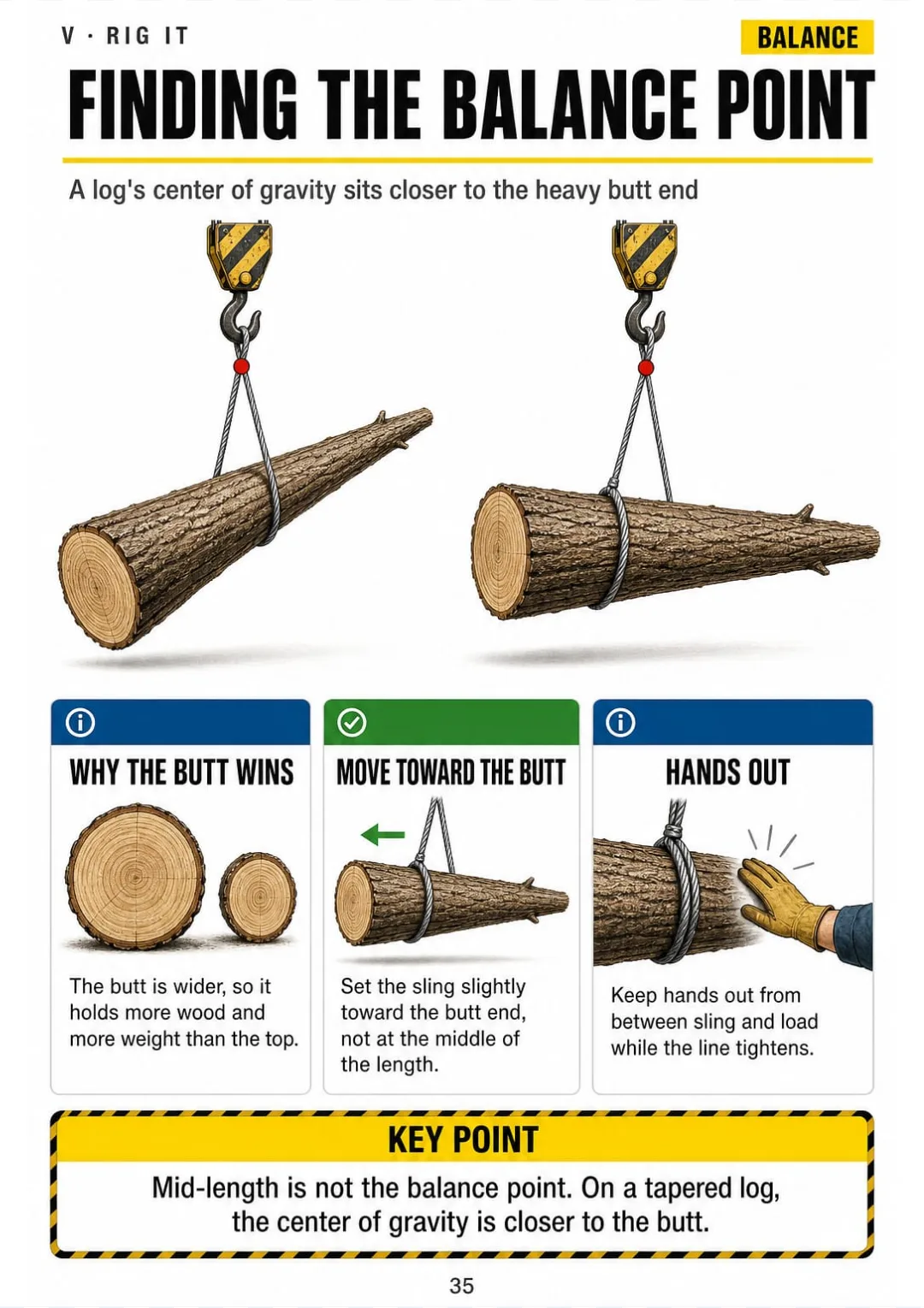
Center of gravity sits closer to the butt: shift the sling toward it to hang level
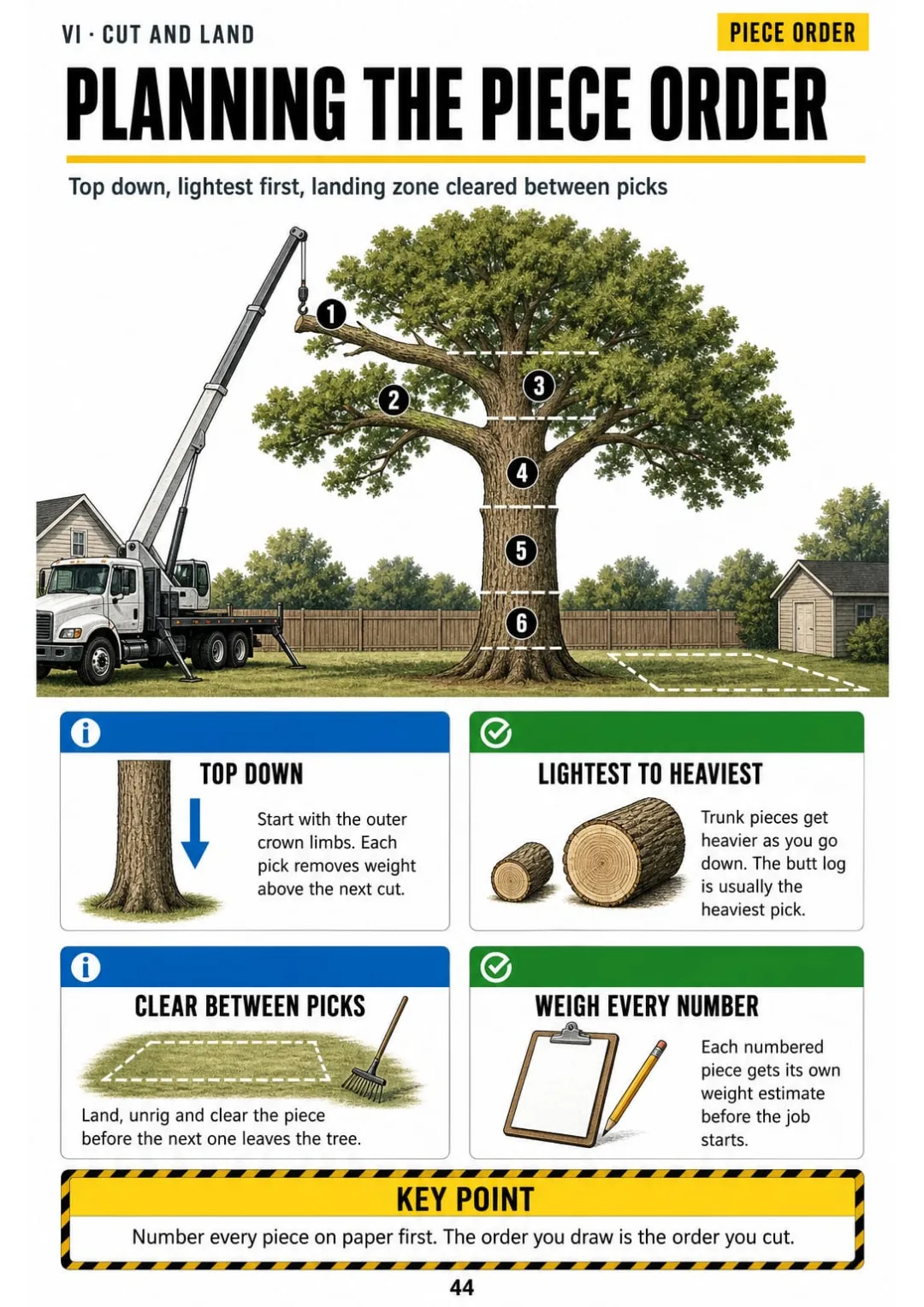
Every piece numbered: top down, lightest first, landing cleared between picks
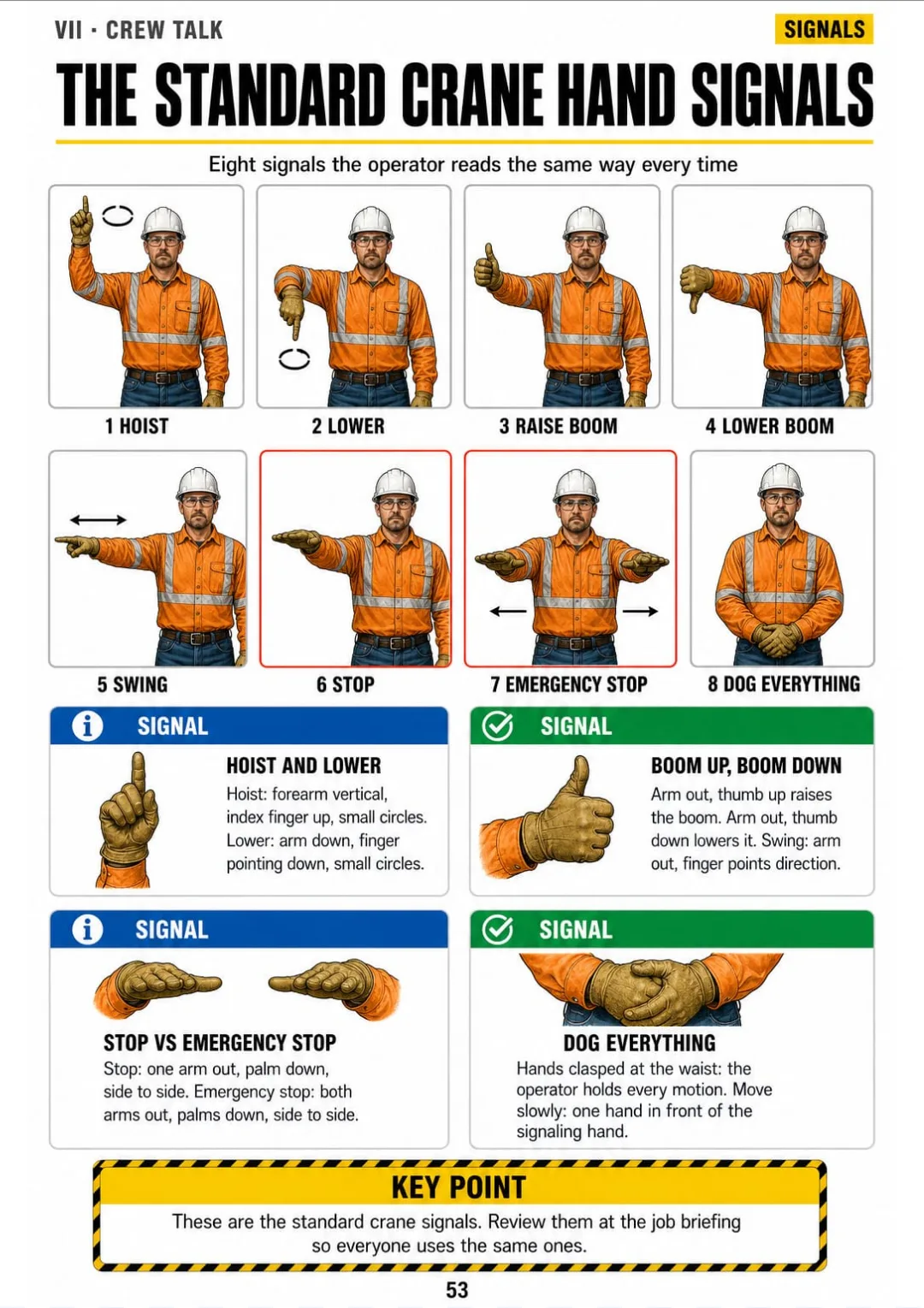
Hoist, lower, boom up, boom down, swing, stop, emergency stop and dog everything, drawn.
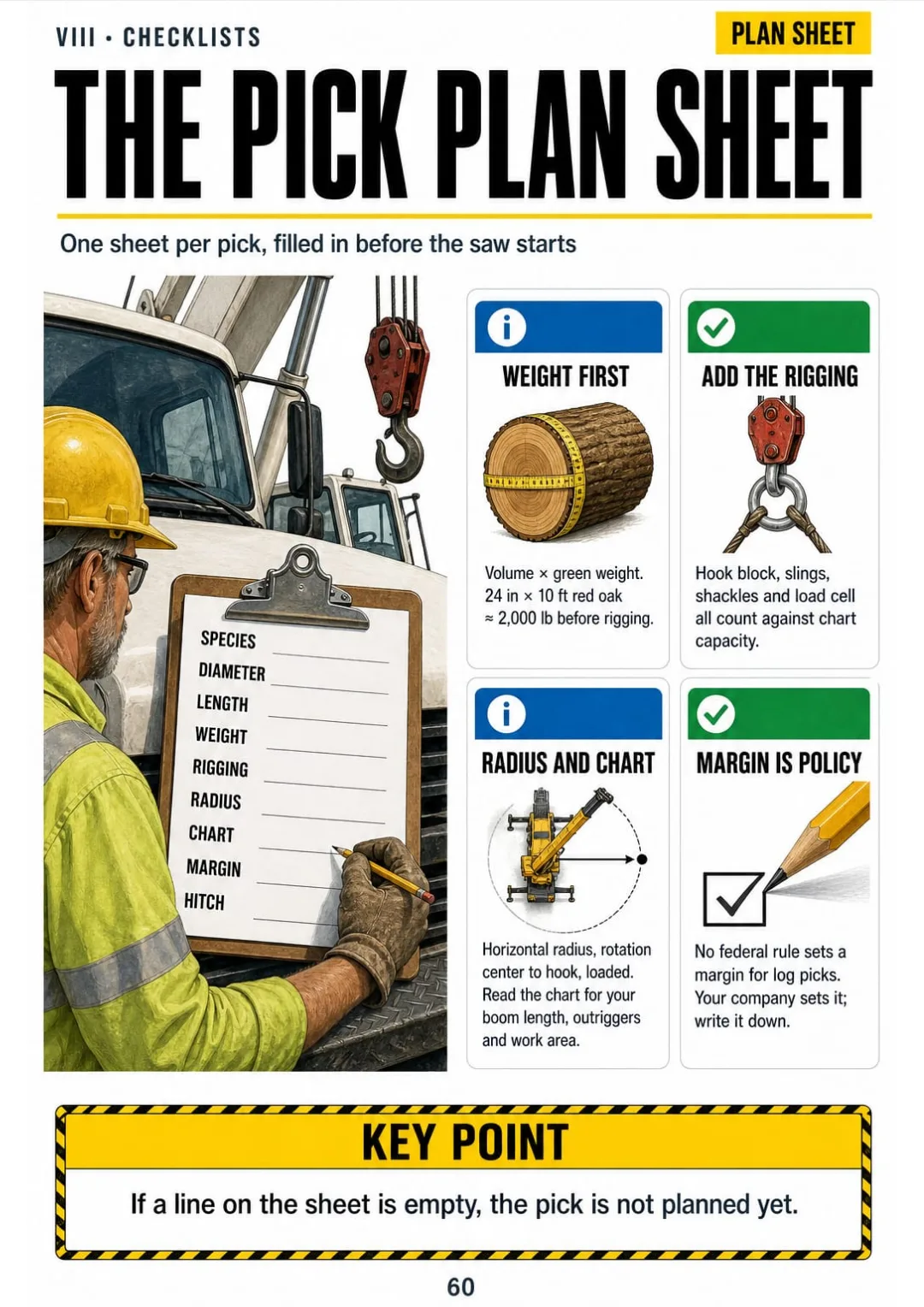
Nine lines per pick: species, diameter, length, weight, rigging, radius, chart, margin, hitch.

Swipe to see more →

These are real pages from the book. The table of contents is the full one: 8 parts and 61 topics.

The Problem Isn't You. It's How It Was Explained to You.

The crane is set up, the climber is tied in, and the operator asks how much that top weighs. You give him a number by eye, and the whole crew is looking at you.

Forestry tables and training handouts cover moisture content in paragraphs: green weight, dry weight, percentages. Nothing on the page shows you why a log can weigh far more than it looks.

Green wood can carry 30% to over 200% of its dry weight in water

In the book, that topic is one page. Green wood drawn next to dry wood, with the water shown as weight: from 30% to over 200% of the dry weight, depending on the tree.

Log volume in cubic feet, green weight per cubic foot, the load chart, the balance point and the piece order: each one has its own page, drawn the same way.

You see why the guess was off and you work out the weight before the pick, without going back to the manual.

COMPARE FOR YOURSELF

The Same Topic, Two Ways to Study It

THIS
  • The manual: line after line
  • Tree assessment explained only in words
  • You show up to the job still unsure
Prior to the arrival of the crane, the qualified arborist shall conduct a thorough assessment of the tree, giving due consideration to species, overall dimensions, structural defects, the presence of decay or cavities, lean, and the proximity of targets and energized conductors. Accurate species identification is required in order to estimate green wood density, which may vary considerably; red oak, for instance, may approach 63 pounds per cubic foot in the green condition. All such observations should be recorded and communicated to personnel prior to commencement of operations.
FOR THIS
  • The tree read in one drawing
  • Species, size, lean, decay, targets and lines: six marks in one box
  • You see it and you get it
Six things to mark on the tree, and why red oak runs about 63 lb per cubic foot green
CONTENTS

Take a Look at the 8 Parts and 61 Topics

How a crane removal works, size up and set up, weighing the pick, reading the load chart, rigging, cutting and landing, crew talk and the climber, checklists and frequent mistakes: 65 pages, all illustrated.

IHow a Crane Removal Works · pp. 5-10
  1. The 6-Step Pick Method
  2. Why Crane Work Is Not Rigging Down
  3. Who Does What on a Crane Job
  4. Who Has to Be Qualified
  5. Crane Types You'll Meet on Tree Jobs
  6. The Parts of the Crane That Matter to You
IISize Up and Set Up · pp. 11-18
  1. Reading the Tree Before the Crane Arrives
  2. Sizing Up the Site
  3. Power Lines: Clearance First
  4. Ground Bearing Under the Outriggers
  5. Mats, Cribbing and Level
  6. Choosing Where to Set the Crane
  7. Weather Go / No-Go
  8. The Job Briefing
IIIWeigh the Pick · pp. 19-27
  1. Why Eyeballing Fails
  2. Log Volume in Cubic Feet
  3. Measuring Diameter and Taper
  4. Green Weight per Cubic Foot
  5. Worked Example: A Straight Log
  6. Estimating a Crown Section
  7. What Changes the Weight
  8. Adding the Rigging Weight
  9. Using a Load Cell on the Hook
IVRead the Load Chart · pp. 28-34
  1. What a Load Chart Shows
  2. Radius Is Everything
  3. Boom Angle and Boom Length
  4. Deductions From Chart Capacity
  5. Planning a Margin
  6. Over the Front, Over the Side, Over the Rear
  7. The Load Moment Indicator
VRig It · pp. 35-43
  1. Finding the Balance Point
  2. Vertical, Horizontal or Angled Pick
  3. Choker Hitch on a Stem
  4. Basket and Two-Leg Bridle
  5. Sling Angle Cuts Capacity
  6. Synthetic Slings vs Wire Rope
  7. Shackles and Hardware
  8. Inspecting Slings Before the Pick
  9. Tag Lines
VICut and Land · pp. 44-52
  1. Planning the Piece Order
  2. Loading the Line Before the Cut
  3. The Cut Sequence for a Vertical Pick
  4. Pinching and Binding
  5. Shock Loading
  6. The Piece Leaves the Tree
  7. Landing Zone Setup
  8. Spar and Butt Picks
  9. Dead and Decayed Trees
VIICrew Talk and the Climber · pp. 53-59
  1. Standard Hand Signals
  2. Radio Commands
  3. Who Gives the Signal
  4. Climber Tie-In and Position
  5. Hoisting the Climber on the Crane
  6. Ground Crew Positions
  7. Teaching a New Hand
VIIIChecklists and Frequent Mistakes · pp. 60-65
  1. The Pick Plan Sheet
  2. Pre-Lift Checklist
  3. Frequent Weight Mistakes
  4. Frequent Rigging Mistakes
  5. Frequent Cutting and Signal Mistakes
  6. The 6 Steps on One Page

One Page, One Topic, All Clear

Think of it this way:

The crane is booked for the morning and the first piece is a long leader hanging over the roof. You need the weight and the hitch before the climber makes a single cut.

You open the page on the balance point and see the log drawn with its center of gravity closer to the butt, and the sling shifted toward it so the piece hangs level.

Center of gravity sits closer to the butt: shift the sling toward it to hang level

Same with log volume, the load chart, sling angles, the cut sequence and the hand signals: each one on its own page.

Crane Tree Removal Illustrated is 8 parts and 61 topics, all drawn, and at the end you get the pick plan sheet, the pre-lift checklist, the frequent mistakes and the 6 steps on one page.

What you see drawn, you don't have to memorize.

What's Inside Crane Tree Removal Illustrated:

Ipp. 5-10

How a Crane Removal Works

The 6-step pick method, why crane work isn't rigging down, who does what, who has to be qualified, crane types and the crane parts that matter to you.

IIpp. 11-18

Size Up and Set Up

Reading the tree, sizing up the site, power line clearance, ground bearing under the outriggers, mats and cribbing, where to set the crane, weather go/no-go and the job briefing.

IIIpp. 19-27

Weigh the Pick

Put the pick weight on paper instead of guessing: why eyeballing fails, log volume in cubic feet, diameter and taper, green weight per cubic foot, a worked log, crown sections, what changes the weight, rigging weight and the load cell.

IVpp. 28-34

Read the Load Chart

What a load chart shows, radius, boom angle and length, deductions, planning a margin, over the front, side and rear, and the load moment indicator.

Vpp. 35-43

Rig It

The balance point, vertical, horizontal or angled picks, choker, basket and two-leg bridle, sling angle, synthetic vs wire rope, shackles, sling inspection and tag lines.

VIpp. 44-52

Cut and Land

Piece order, loading the line, the cut sequence for a vertical pick, pinching, shock loading, the piece leaving the tree, the landing zone, spar and butt picks, dead trees.

VIIpp. 53-59

Crew Talk and the Climber

Hand signals, radio commands, who gives the signal, climber tie-in and position, hoisting the climber, ground crew positions and teaching a new hand.

VIIIpp. 60-65

Checklists and Frequent Mistakes

The pick plan sheet, the pre-lift checklist, frequent weight, rigging, cutting and signal mistakes, and the 6 steps on one page.

At the end of the book: A pick plan sheet, a pre-lift checklist, the frequent mistakes and the 6 steps on one page.

Plus: 2 Free Books

Pick Weight Workbook: 20 Worked Picks

BONUS 1: «Pick Weight Workbook: 20 Worked Picks»

Value on its own: US$ 17.90

Practice estimating log weights and balance points on 20 real-world pieces, with the full answer drawn on the next page.

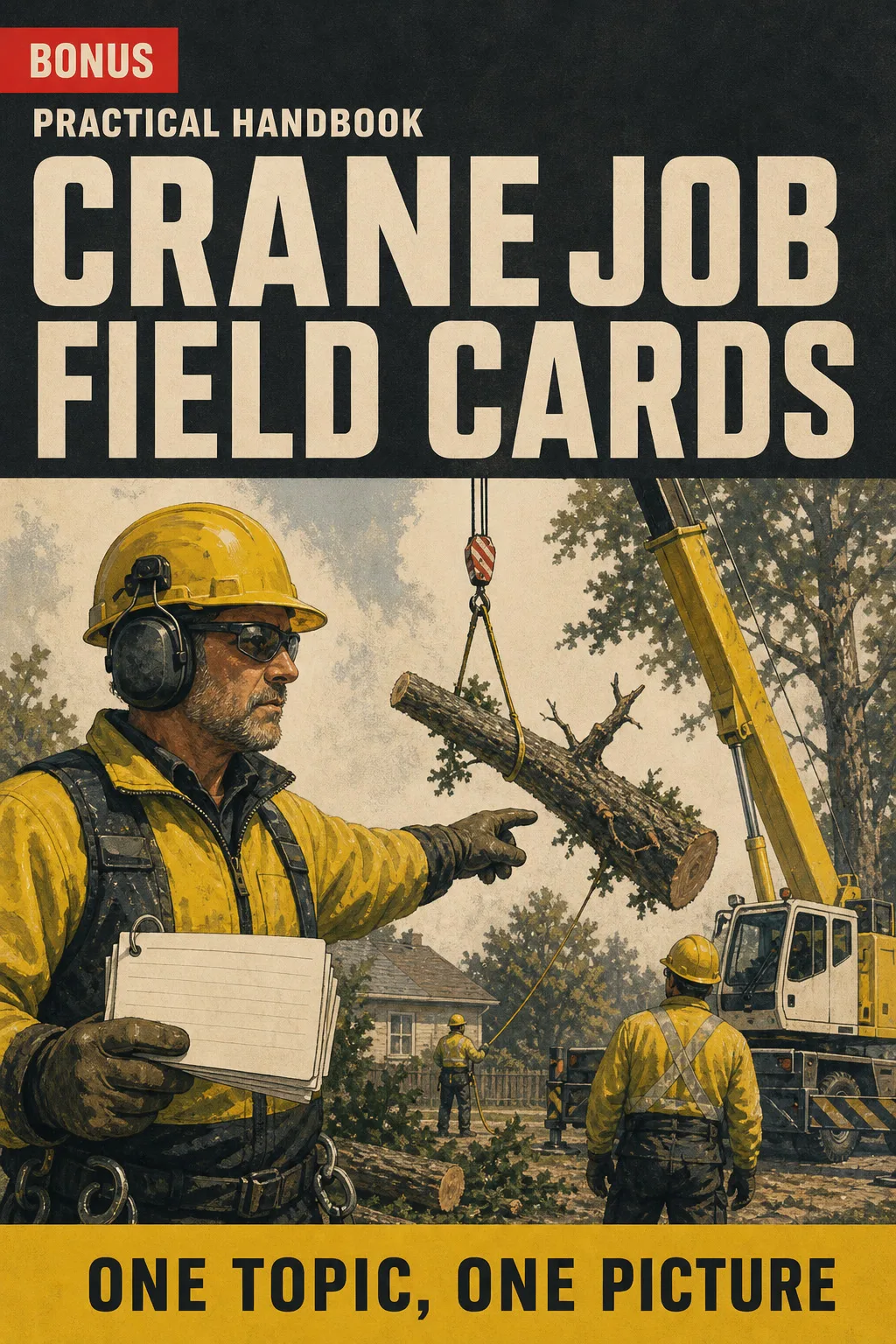
Crane Job Field Cards

BONUS 2: «Crane Job Field Cards»

Value on its own: US$ 14.90

Print the hand signals, radio commands, weather go/no-go chart and pre-pick check on pocket cards to keep in the truck.

Crane Tree Removal Illustrated with 2 Free Books

  • Crane Tree Removal Illustrated: 65 illustrated pagesUS$ 63
  • BONUS 1: Pick Weight Workbook: 20 Worked PicksUS$ 17.90
  • BONUS 2: Crane Job Field CardsUS$ 14.90
  • High-resolution PDF to printIncluded
Total value US$ 95.80
YOUR PRICE:
US$ 27
You save US$ 68.80
YES, I WANT CRANE TREE REMOVAL ILLUSTRATED FOR US$ 27

📄 This is a digital PDF book sent to your email: nothing is printed or shipped.

Secure purchaseEncrypted payment30-day guarantee

PDF by email: We email you Crane Tree Removal Illustrated as a PDF, together with the two free books. It's a single payment: no installments, no extra charges.

Who This Book Is For

You just added crane removals

You just added crane removals

The method in order from your first pick: weight, chart, hitch, cut and landing, so every piece is planned on paper before the climber cuts.

You run the crane, new to tree work

You run the crane, new to tree work

Why wood isn't steel, drawn: no stamped weight, a balance point that isn't the middle and a load that moves the second it's cut.

You already run crane jobs with a crew

You already run crane jobs with a crew

One method the climber, the operator and the ground crew read the same way, and pages to teach a new hand with the book open on the tailgate.

Everything You Get Today

US$ 95.80US$ 27
YES, I WANT CRANE TREE REMOVAL ILLUSTRATED FOR US$ 27

📄 This is a digital PDF book sent to your email: nothing is printed or shipped.

30DAYS
GUARANTEE

30-Day Guarantee

Try Crane Tree Removal Illustrated for 30 days, bonus books included.

We refund everything if the file won't open, if the book isn't what you see here, if you were charged twice or if the email doesn't arrive. Just email us.

You pay once. No subscriptions.

Frequently Asked Questions

Is it for me if I've been climbing and cutting for 20 years?

Yes. It doesn't teach you to cut. It puts the crane side in order (weight, load chart, hitch, cut sequence, signals) so the whole crew plans every pick the same way.

Where does the content come from?

It's cross-checked with ANSI Z133, OSHA's crane rules (29 CFR 1926 Subpart CC), ASME B30.5, B30.9 and B30.26, and published US forestry data for green wood weights. The book shows green weight per cubic foot for common US species and how to work out the weight of any log from a published table. Weights in pounds, sizes in feet and inches.

Is it official material?

No. It's an independent illustrated book. It isn't issued or endorsed by any standards body, agency or crane manufacturer.

Does it replace training or my crane's manual?

No. It doesn't replace crane operator training or certification, the manufacturer's load chart and operator's manual, or the judgment of a qualified operator. It gives no certificate or credits. The load chart in the book is a generic teaching example: on the job, always use your crane's own chart.

Are the practice picks real job data?

No. The 20 worked picks are written for this book as practice: you estimate the weight and balance point, then check the answer drawn on the next page. On the job, always weigh and chart your own pick.

When and how does it arrive?

As a PDF by email, at the address you enter at checkout: the book and the 2 bonus books.

Do I have to pay every month?

No. It's a one-time payment.

Can I have it on paper?

Yes. It's a printable PDF: print the whole book or just the pages and field cards you want in the truck.

How does the refund work?

You have 30 days. We refund everything if the file won't open, if the book isn't what you see on this page, if you were charged twice or if the email doesn't arrive: just email us.

Before You Close This Page

The operator asks the weight. It's already on your sheet.

The balance point? It's drawn right there on the page.

You show up to the job knowing where everything is.

Drawings make studying faster.

The book is right below.

One-time payment: US$ 27 · Guarantee: 30 days · PDF by email

YES, I WANT CRANE TREE REMOVAL ILLUSTRATED FOR US$ 27

📄 This is a digital PDF book sent to your email: nothing is printed or shipped.